Bird and Magic stared each other down wearing Converse. Jordan won six in seven years wearing Nike. Kobe and LeBron repped the swoosh through the 2000s and 2010s. Today, it's Luka Doncic and Jayson Tatum competing for a championship. Both are signed with Nike's Jordan brand made popular by MJ's dominance on the court in the '90s and his shoes' dominance in magazines, retail stores, fashion shows, and consumers' minds ever since.
While Luka and Tatum compete for a championship in their signature shoes, shoe brands will compete to put shoes on the feet of young basketball fans. Adidas, Puma, New Balance, Under Armour, and Li-Ning find themselves on the outside looking in at the biggest NBA event of the year. Adidas will hope Anthony Edwards' popularity carries through the summer despite a quick Western Conference Finals loss. Puma may look to the draft for the next superstar to kickstart its basketball division after making Scoot Henderson the first rookie with a signature shoe since LeBron James. New Balance might consider moving some of their eggs out of the Kawhi Leonard basket. Under Armour will continue to ride its partnership with Steph Curry.
For years, sports fans have shown their allegiance through the shoes on their feet. I wore Derrick Rose's signature shoe on my high school basketball team's bench after fouling out in my first appearance. Back then, wearing Steph's shoe was an endorsement of the Warriors dynasty, LeBron's a bet on the underdog Cavs, and Rose's an homage to a star taken by injuries (this was 2015). Personally, I knew I couldn't wear Steph's shoe while I had a shooting percentage in the teens or LeBron's after stealing any chance for my Atlanta Hawks to win a championship, so D Rose it was.
The cost of doing business for these brands can be both expensive and long-lasting. Adidas is still paying Derrick Rose more than $10M per year despite a career sunk by injuries. Brands simply cannot make the decision to give a player a signature shoe without clear strategic goals and priorities, lots of projection, and an entire workforce behind it.
So… Who Gets Signature Shoes?
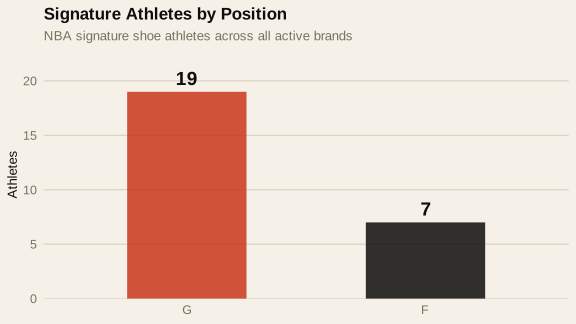
Twenty-six active players have their own signature shoe line produced by one of the big seven shoe brands (Nike, Adidas, Puma, New Balance, Under Armour, Anta, and Li-Ning). Of those, nineteen are guards — those two positions on the court make up 76% of signature athletes. The remaining seven are forwards. None are centers despite three consecutive MVP centers in Joel Embiid and Nikola Jokic twice.
Jokic signed a deal in 2023 with Chinese footwear brand 361° — an Anta and Li-Ning competitor which counts Jokic, his teammate Aaron Gordon, and Spencer Dinwiddie as its signature athletes. Nike and Adidas choosing to pass on the NBA's top talent is certainly interesting.
Embiid's story as a signature athlete is a bit more complicated. Under Armour produced just one signature shoe for Embiid over five years before UA let Embiid's contract expire. Embiid signed with Skechers in April 2024. Skechers just entered the basketball shoe market in October 2023, and looks to be following a playbook similar to that of the Chinese brands (signing established talent) rather than the playbooks of Nike and Adidas (signing young, soon-to-be stars) or even Puma (giving young players signature shoe deals before their play on the court truly warrants it).
The fate of centers may be shifting in the coming years as Victor Wembanyama is set to get his own signature shoe after a silly rookie season.
Draft Pedigree Matters
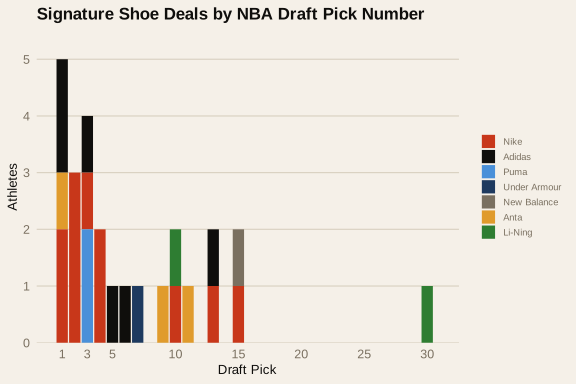
Wemby will join a group of five first overall draft choices with signature shoes. Certainly, this disparity in shoe deals can be attributed to talent (the top picks are usually the best players). Many of these brands sign players based on potential, and are happy to bet on the top of the draft board while lower-drafted players have to wait and prove themselves before signing a signature shoe deal. Draft hype could play a role as well; in most years the top five picks are well-known from either their college days or the avalanche of pre-draft coverage on every media network.
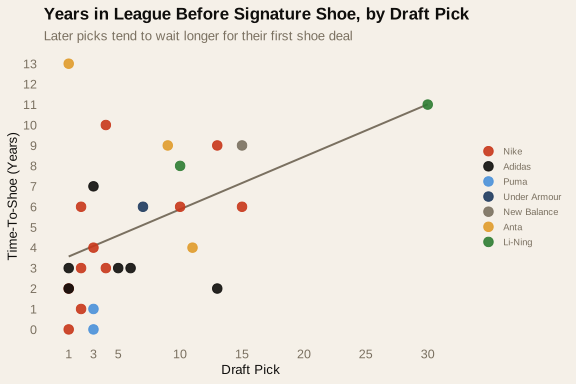
Brands latch onto that pre-draft hype, giving top picks signature deals much sooner than mid-first-rounders. Kyrie is the lone top pick who got a signature deal deep into his career — Nike gave Kyrie a signature shoe by his third year, but antisemitic comments made by Kyrie in 2020 made that relationship untenable. Kyrie signed with Anta shortly thereafter and thus shows up as a 13-year vet signing a signature shoe deal.
Key finding
Removing Kyrie, a first overall pick waits just 2.87 years for a shoe. Every pick past 1 adds another 4 months to a player's projected Time-To-Shoe.
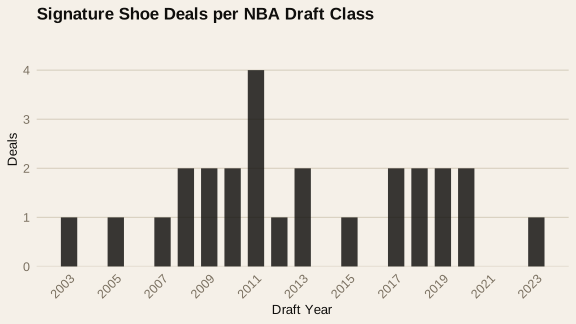
Most draft classes will bring two new signature athletes into the mix. That trend could change as newer entrants like Puma, New Balance, and perhaps Skechers try to lure top prospects away from Nike and Adidas with a guaranteed signature shoe.
Do Brands Chase the Same Player Types?
Nike and Adidas have fought over the same players for decades. Amazon even produced a movie — Air — about the competition for the rights to Michael Jordan's feet. It feels safe to say Nike won that battle. Nike even won the battle for the next generation's Michael Jordan (LeBron James). And maybe the generation after that (Victor Wembanyama)?
From then to now, the battlegrounds have changed. Puma, New Balance, and Skechers all hope signing the right athlete can kickstart their nascent basketball shoe divisions. Anta, Li-Ning, and 361° hope their combination of aging stars and role-players can drum up interest in the Chinese market. Under Armour has managed to steal this generation's biggest gamechanger away from Nike and Adidas, and has benefitted massively as a result.
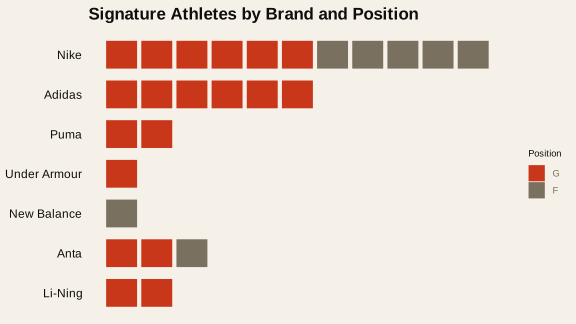
Guards often carry the ball up the court, holding the ball for much more of the game than most forwards and almost all centers. They are frequently in highlight reels. As a result, most brands are willing to hitch their wagon to almost exclusively guards. Adidas' rotation features six guards, any of whom could score 50 points every night (even Derrick Rose!). Nike balances their collection of athletes the best, thanks to several once-in-a-generation athletic marvels — LeBron, Giannis, and Kevin Durant among them.
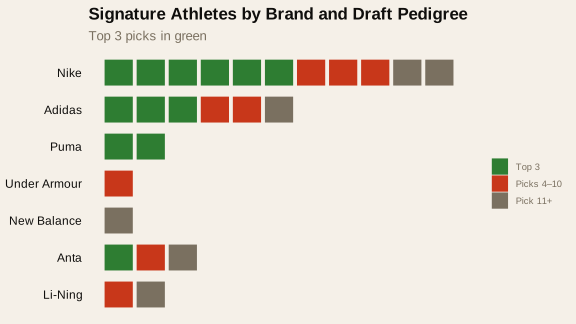
Six of Nike's athletes were top 3 picks. Half of Adidas' athletes were top 3 picks, with two more from the top 5. Puma is determined to find a star athlete and willing to pay for it, with former top 3 picks LaMelo Ball and Scoot Henderson headlining their collection. Other brands seem content to either find diamonds in the rough or wait for unheralded players to grow into stars.
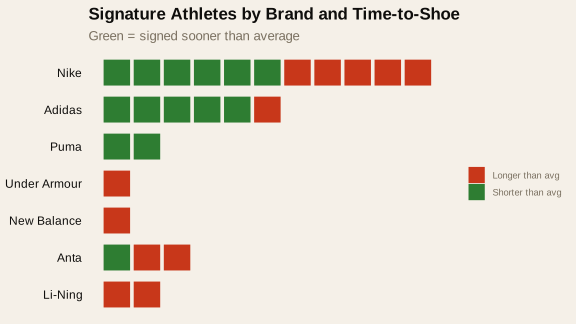
Adidas typically makes signature shoes early in their athletes' careers, a function of signing high-end talent and rewarding them quickly. Puma has given LaMelo and Scoot their own shoes within one year of entering the league. The Chinese brands sign older players who have already built their own brand identity as a star in the NBA.
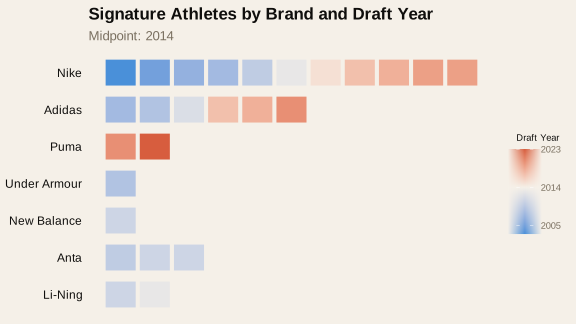
Adidas and Nike hold a well-balanced array of signature athletes, with a good mix of younger and older players. New Balance and UA have just one aging star apiece. Under Armour in particular finds itself in a tricky situation given their perceived lack of quality compared to Nike and Adidas. Joel Embiid's short tenure at Under Armour certainly will be in the mind of every agent before letting their clients sign with UA.
Which Brands Are Best at Projecting the Next Superstar?
Some brands have a higher tolerance for uncertainty than others, willing to risk a bad shoe deal for the chance at the next brand-defining player (Jordan, Kobe, LeBron, and Steph are the only four that really come to mind, and three of those four were signed by Nike).
A quick note: PRA is a player's Points, Rebounds, and Assists combined; PRAPG is the per game version. I looked at how players performed in the year immediately preceding their signature shoe release and the two years immediately after, in percentage terms.
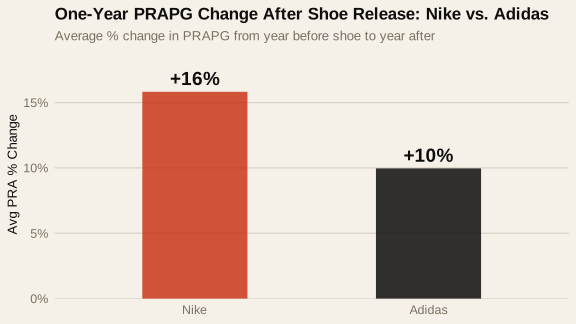
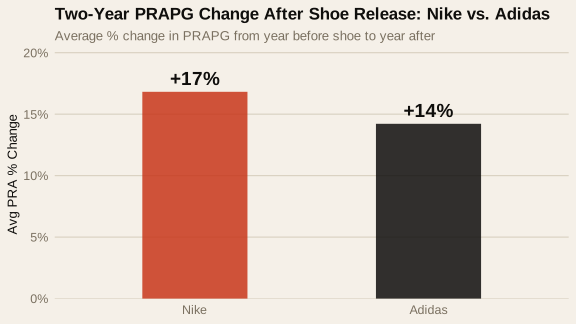
Nike's athletes outpace their pre-shoe figures by nearly 16% on average in the first year after the shoe and 17% in the second year. Adidas' athletes outperform their pre-shoe numbers by just 10% in the first year but make up some of the distance in the second year with a 14% improvement.
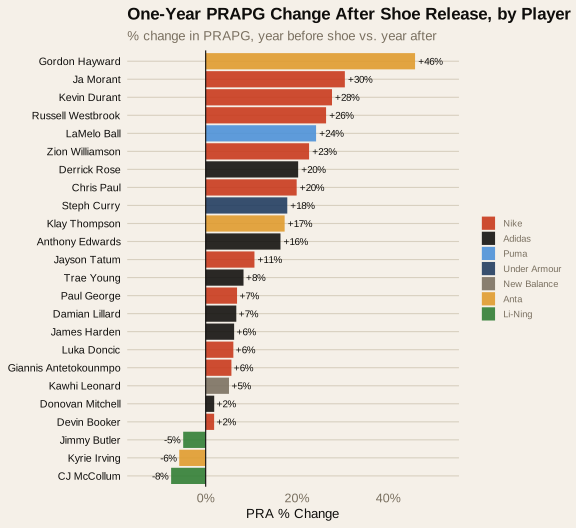
Nike released signature shoe deals for Ja Morant, Kevin Durant, Russell Westbrook, and Zion Williamson right before huge seasons. It's possible Nike is just really good at projecting stardom. Its other athletes, though, improved to lesser extents — Devin Booker, Giannis, Luka, Paul George, and Jayson Tatum each under 11% improvement. For me, the difference between the two categories is clear: athleticism and/or draft pedigree. The former group were or are elite athletes, and Nike may have been more willing to give them an early shoe deal as a result of the highlight reels that come with jumping over people (Ja and Russ), jumping through people (Zion), or just plain old shooting over people (KD).
At the end of the day, signature shoes are a popularity game. Dunks sell shoes.
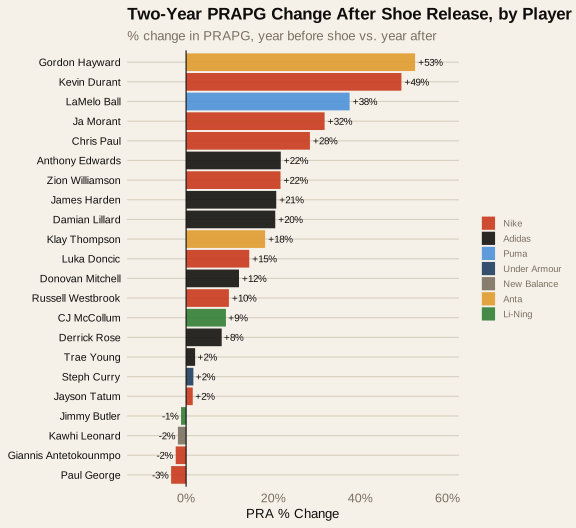
The 2-year deltas show more of the same. Looking at these, you might think Gordon Hayward had the greatest two year stretch of all time. I promise that is not the case — his low pre-shoe baseline inflates the percentage change.
(Can you tell I'm making excuses so that Trae doesn't look so bad at the bottom? I hope not. While we're talking about Trae, he's an example of a player who reached a ceiling, got a shoe, and has held steady at that ceiling. Steph is another example of shoe brands "buying high" and being rewarded.)
How Elusive Is the WNBA Signature Shoe?
One of the most interesting developments in the signature shoe world this past NBA season was the prevalence of Nike's Sabrina 1 on the court at almost any game. 77 NBA players have rocked Sabrina Ionescu's signature kicks in-game this season per kixstats.com, but Sabrina is one of few women ballers to earn themselves a signature shoe deal. The WNBA has just 5 signature athletes — including Caitlin Clark and A'ja Wilson, whose signature shoes were announced earlier this year but not yet released.
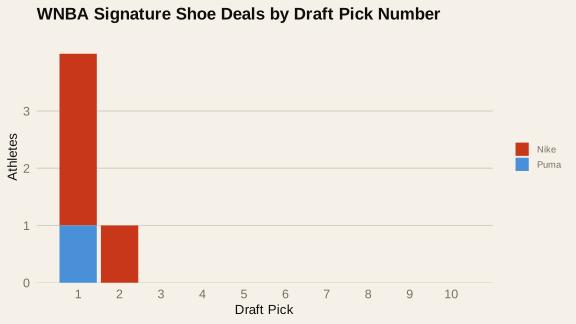
Unlike the NBA, where top picks get most but not all of the signature shoes, the WNBA's top prospects are also footwear brands' top prospects. That's bad news for my favorite W athlete Arike Ogunbowale (a former 5th overall pick, and now a lock for a nightly 25-5-5 statline), but good news for next year's projected top pick Paige Bueckers. Expect to see more women from the later part of the first round with their own signature shoe as the WNBA continues to gain popularity.
Outside of Basketball…
Despite more overall popularity, other leagues see much fewer signature shoes than the NBA. Individuals stand out on a basketball court of ten players. Their faces are recognizable and constantly on-screen; their shoes are in every shot. Other leagues are both much more team-oriented and stricter on protective helmets that cover athletes' faces. Pat Mahomes is a superstar, but he is most recognizable when he wears a red helmet and, as good as he is, he's only on the field for half the game.
Further, basketball footwear has uniquely transcended into the fashion world. Air Jordan can be both a performance sneaker and a fashion accessory. The product on the floor is the same product people wear on the streets. For cleat-using sports, that simply will never be the case. Thus, footwear brands are forced to accept one of two realities: pay big money for a signature basketball player to lead your sneaker division or miss out on the marketing awareness a superstar athlete can bring to a sneaker brand.
Sources: ESPN, Adidas, Puma, New Balance, Nike, Under Armour, Anta, Li-Ning, kixstats.com