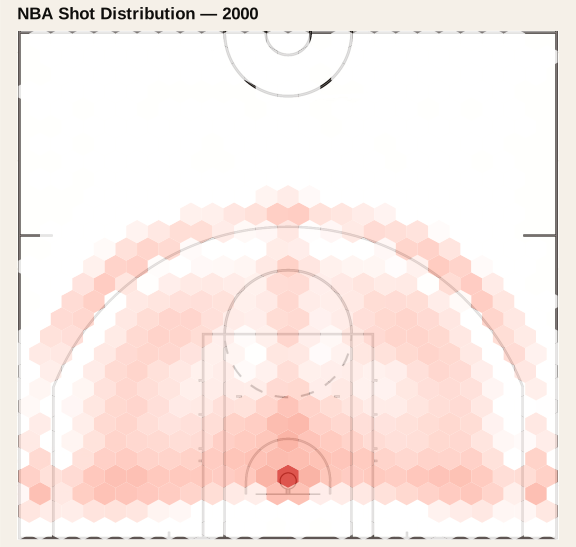
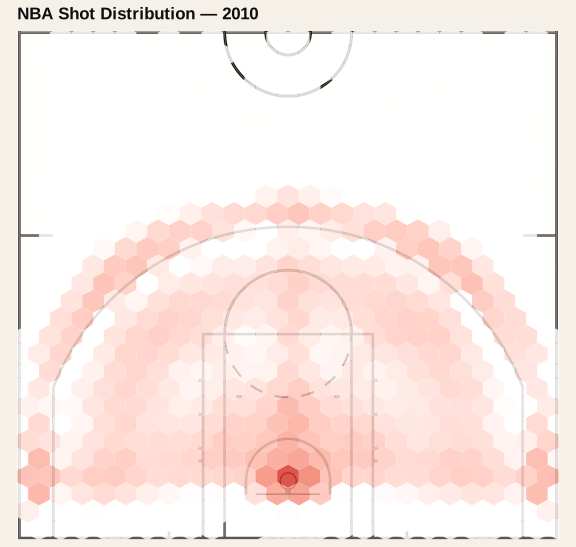
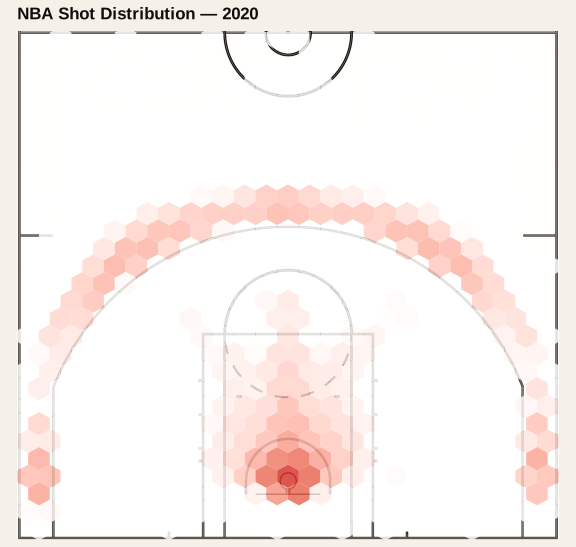
Analytics are often blamed for changing America's game — baseball. Tune into any MLB game and you'll be inundated with numbers — even the ball parks themselves lean into analytics, with many in-stadium experiences featuring pitchers' spin rate, ERA, ERA+, and ERA++ proudly on the jumbotron (okay, I made the last one up…).
Less notably, and without a Brad Pitt movie to show for it, basketball analytics have similarly redefined the sport.
Unlike baseball, where advanced analytics riddled with acronyms took over the game, the NBA's evolution was the result of one simple number: expected points. A shot's expected points can be calculated by multiplying its point value (1, 2, or 3) by the likelihood it goes in (more conventionally called shot percentage). The more expected points a shot gets, the better.
Expected points = point value × shot percentage
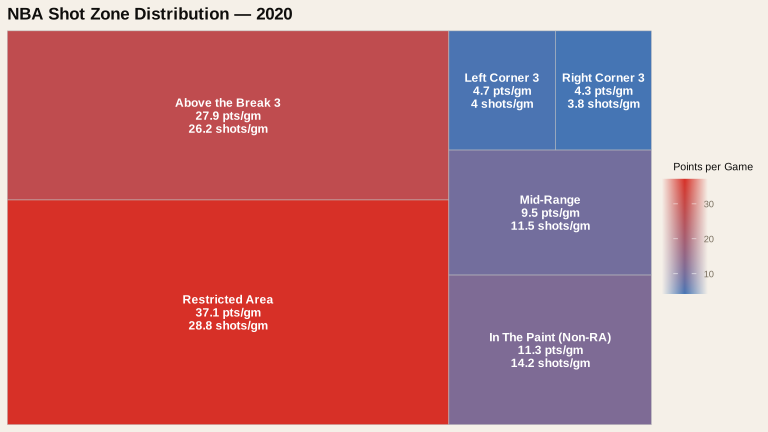
Every 3 point shot ranks among the highest in expected value per attempt.
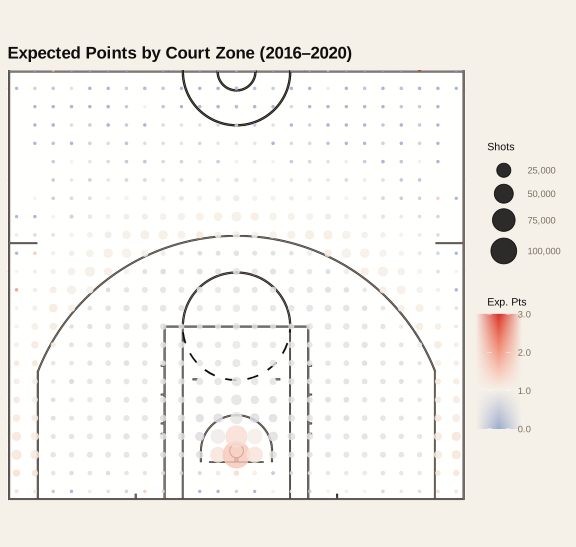
Over the past five years, if you can't take a shot from almost directly under the rim, you're better off taking one from behind the arc. Some players are good enough mid-range shooters — or bad enough 3-point shooters — to buck that trend, but the average player need not look further than the red on the above graph for where to shoot their shots.
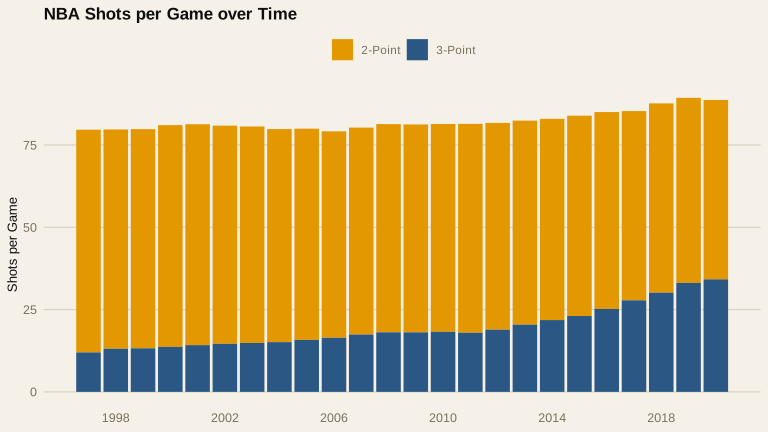
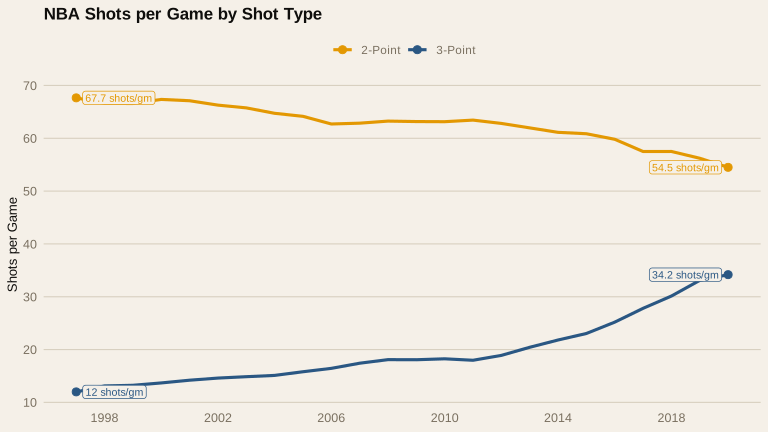
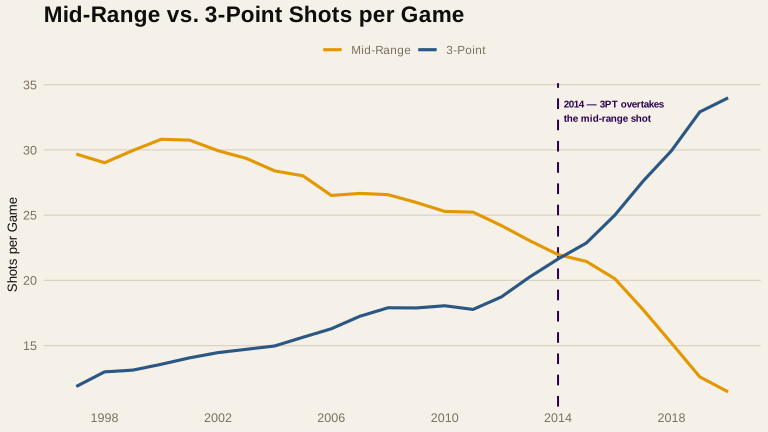
As the league embraced analytics, the NBA's shooting landscape changed dramatically. The 3 point shot, once hovering around 15 shots per game, has climbed to more than 30 shots per game.
Key finding
Since 1997, 2-point attempts are down 19% — while 3-point attempts are up 185%
The Death of the Mid-Range
The mid-range, once a healthy staple of any shooter's diet, has become a vestige of a long-gone era. Today, Kevin Durant and DeMar DeRozan hold the title for the league's Chief Mid-Range Officers, and both are in the back half of their careers. In the modern game, there are few takers for that title.
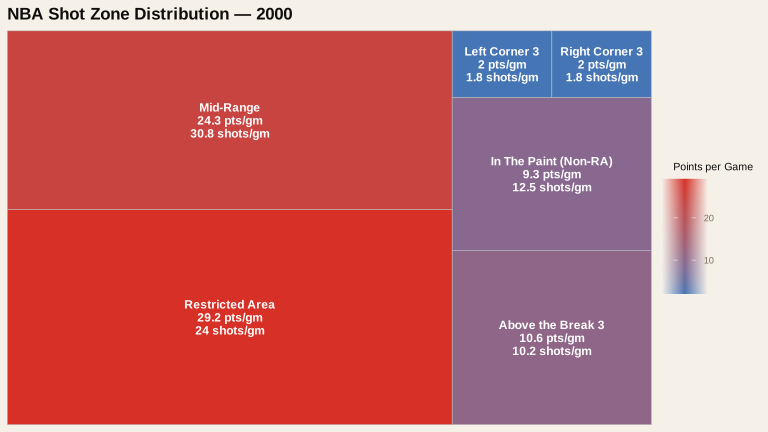
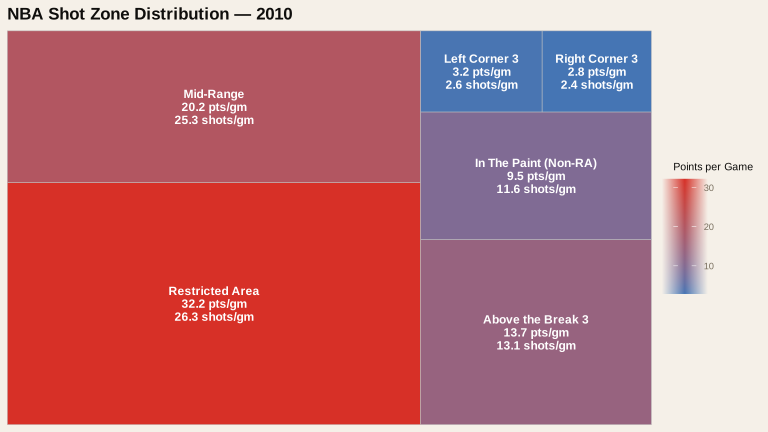
Today, the mid-range is on its last legs as coaches and players collude to remove it (and its relatively low expected point value) from the game. A surge in the perceived value of the corner 3 (the shortest shot worth 3 points) could push the 3 point shot even further in the coming years.
Incredibly, the mid-range shot held on until 2014 before the 3 finally overtook it in popularity. Since then, the three has continued its ascension to popularity levels never seen by the mid-range, and the mid-range shot is taken as much as the 3 was in the '90s. Perhaps not so coincidentally, Steph Curry won the first of two back-to-back MVPs in 2014, shepherding in a new era of basketball.
Case Studies — Curry & Westbrook
Steph is the king of the 3-pointer. No player is more feared beyond the arc — for good reason. Steph takes a lot of 3s… and makes a lot of 3s.
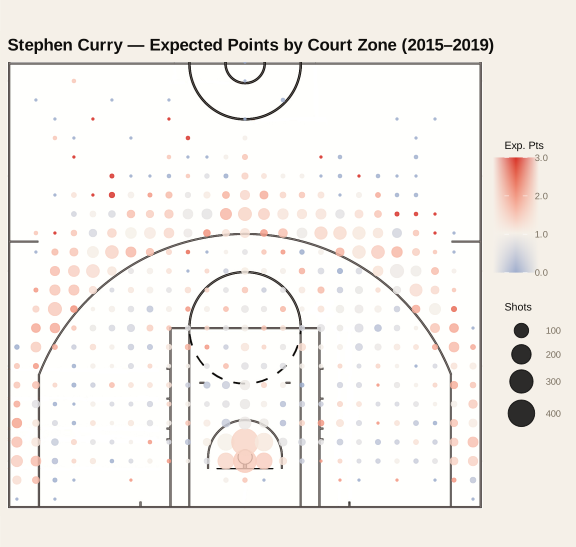
No player has better embraced the deep ball than Steph Curry, and his shooting chart shows it. Steph either takes a high-percentage 3 or slashes to the rim for a high-percentage shot in the restricted area. Even for the best shooter of all time, most of the mid-range produces below league-average expected points.
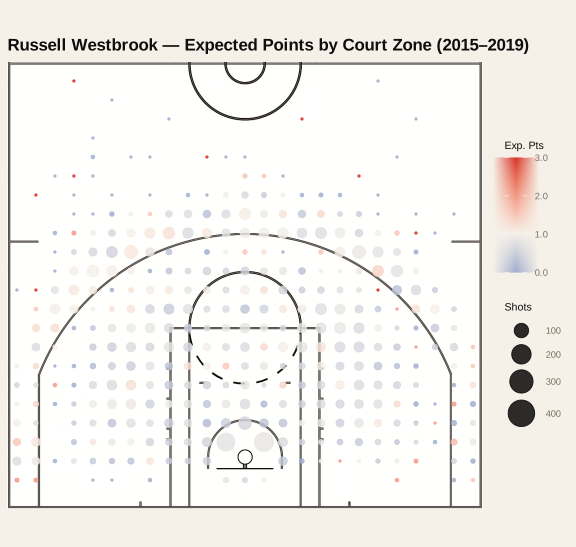
On the other side of the spectrum, Russell Westbrook has failed to modernize his scoring game. While he consistently takes advantage of shots at the rim, he has not moved his shots from the midrange to the perimeter. Instead, he spreads his shots across the court. For Westbrook, a larger diet of 3s might not be as valuable as passing the ball to a more efficient teammate, as most of his shots from deep are actually below the league average in expected points per attempt. His value lies in crashing the paint to either get a high-percentage shot for himself, a pass to a high-percentage 3-point shooter, or a pass to another player in the paint.