There are few moments more puzzling as a sports fan than watching your team march all the way to the opponent's goal line — the precipice of six (hopefully seven) points — only to line up in the shotgun. For those lucky enough to be unfamiliar with this situation: on any given play, the Quarterback will line up either directly behind the Center (we'll refer to this as under center) or five yards behind the Center (shotgun!). A seemingly violent term for an already violent sport, the shotgun formation was originally named for its ability to spread receivers out like a shotgun spreads bullets. Its popularity was a consequence of its effectiveness in the pass game, and, as we'll explore later in this article, it is extremely pervasive in today's NFL. As coaches filled their playbooks with shotgun plays, those same formations started to find their way into goal line packages. That's how we get shotgun at the goal line.
I was first exposed to this phenomenon in Super Bowl XLIX. With 26 seconds left in a four-point game and just one yard to go, Seahawks QB Russell Wilson lined up in the shotgun. His Center, Max Unger, snapped the ball back to the six yard line and Wilson threw the ball… to the other team.
It was not easy growing up with a Patriots fan for an older brother, and Seahawks' Head Coach Pete Carroll made it worse that day. In the 10 years since, I have watched football with a disgust for short yardage shotgun plays. And yet, as though coaches can't feel my — and many like-minded fans' — hateful gaze, shotgun usage across the NFL has soared, both at the goal line and beyond.
25 Years of the Shotgun Revolution
Since 2000, shotgun usage has exploded from under 13% of offensive plays to more than 70%.
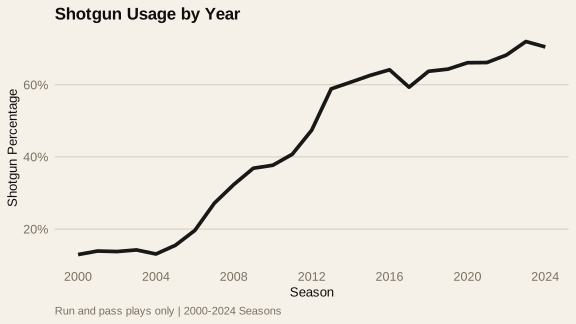
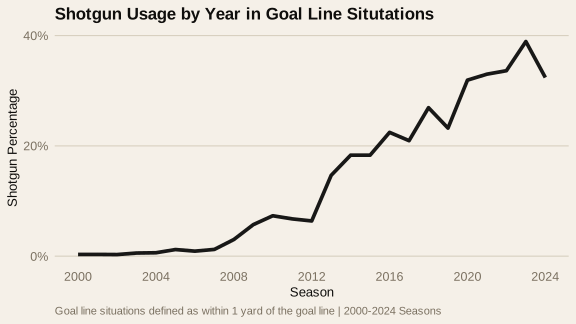
A novelty at the turn of the century, the shotgun formation is ordinary in today's NFL. And those goal line shotgun plays? They now happen on almost 40% of goal line plays. In 2000, teams simply didn't run shotgun plays that close to the end zone.
Indeed, shotgun usage has enjoyed a steep climb in popularity over the past 25 years across all situations. In 2024, teams only favored under center snaps in two situations: within three yards of the goal line or one yard of a first down.
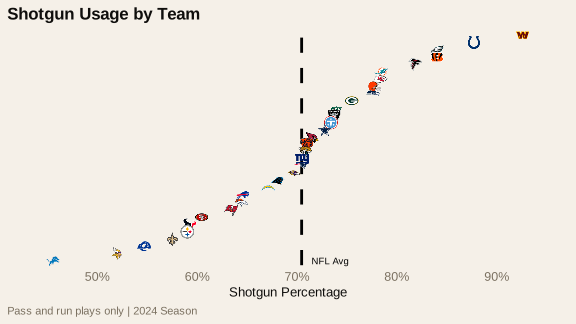
We still see wide variation in formation usage by team. Several of the NFL's most inventive play callers lean heavily into under center action — Detroit's Ben Johnson (now the Bears' Head Coach) put QB Jared Goff under center more than half the time. The Vikings' Kevin O'Connell, the Rams' Sean McVay, and then-Saints Offensive Coordinator Klint Kubiak round out the bottom four in shotgun usage, while the Commanders were allergic to under center action with rookie Jayden Daniels.
Why Shotgun Took Over: The EPA Story
I do not mean this as an indictment on NFL Offensive Coordinators — there are successful offenses at both ends of the spectrum. Nevertheless, there is an answer to why teams have adopted the shotgun over the past 25 years. That answer lies in EPA — Expected Points Added, a metric that aims to put value on each play according to how many points that play is expected to add (or subtract) for the offense.
Almost across the board, shotgun formations yield higher EPA per play than under center plays. The exceptions are 2nd & short (here defined as ≤3 yards), 3rd & short, and 3rd & long (≥8 yards). The difference in 3rd & long EPA can be explained by a small sample size — just 15 plays over the entire 2024 season, 10 of which created first downs. On the other 795 occasions, teams instead opted for shotgun from 3rd and long.
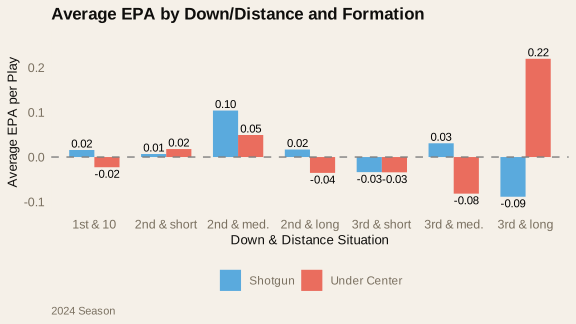
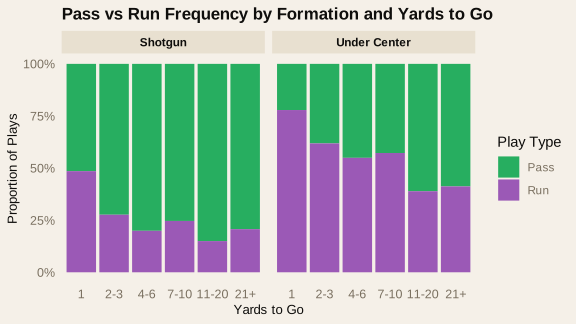
Shotgun excels in medium-to-long distance situations where passing is more common. Teams pass 50% more frequently from shotgun than under center.
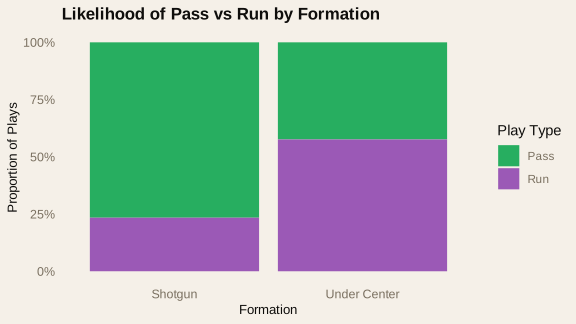
The goal line is not one of those pass-friendly situations.
The Goal Line Problem
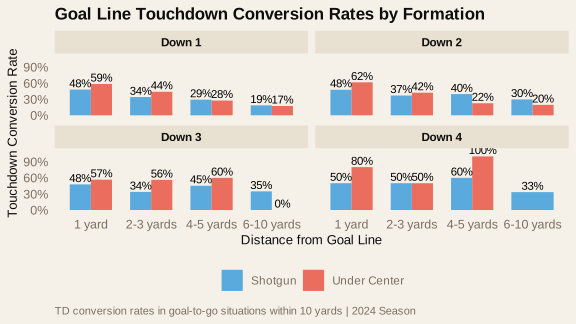
Analyzing touchdown conversion rates in goal-to-go situations at different downs and distances, we see under center action clearly outperforming shotgun from inside the 3 yard line.
Key finding
Lining up under center at the goal line gives teams a 12% higher chance of a touchdown.
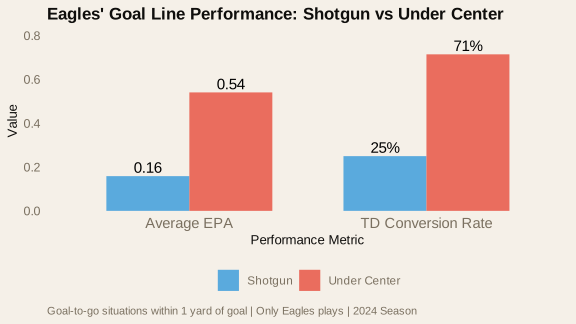
Astute football fans may be wondering how the Eagles' "Tush Push" factors into this. The controversial under center play was so unstoppable that 22 of the NFL's 32 teams voted to ban it this offseason. The "Tush Push" does indeed give Philadelphia an edge, helping the Eagles convert on 71% of their under center goal line plays — 11% better than league average.
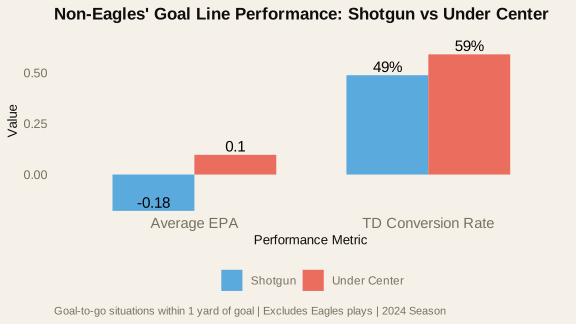
Even removing the Eagles entirely, under center plays outperform shotgun at the goal line by 10%.
Who's Leaving Points on the Table?
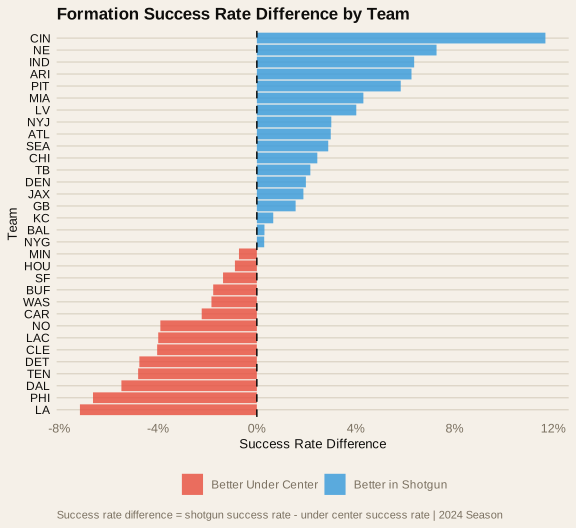
Which teams take advantage of that 10% edge?
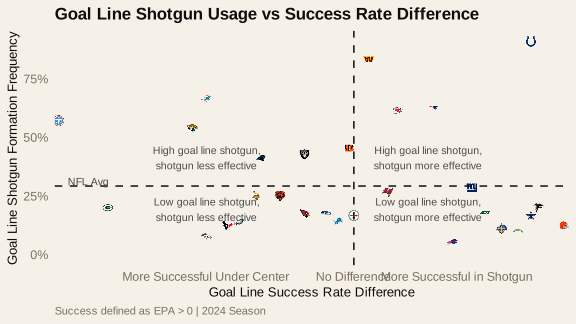
Interestingly, there's a wide dispersion of teams on this chart.
Top right — Run what works
Four teams are more effective out of shotgun and actually run it more from the goal line: three young, mobile quarterbacks (Anthony Richardson, Jayden Daniels, and Drake Maye) and Patrick Mahomes.
Bottom right — Leaving points out
A second group of teams actually underuse the shotgun at the goal line relative to its effectiveness. They should either use more shotgun or get better at under center plays.
Bottom left — The traditionalists
About a third of the league falls in this bucket — better under center and using it more than league average. This is the rational corner of the chart.
Top left — The true contrarians
The Titans, Dolphins, Jaguars, Panthers, Raiders, and Bengals run a lot of goal line shotgun despite being better from under center. The Titans' success rate jumps more than 50% when under center compared to shotgun.
Pete Carroll's infamous call in Super Bowl XLIX was exactly as bad as it seemed. If you have a guy nicknamed Beast Mode, you line up under center and hand him the ball at the goal line.
Decoding Team Philosophy
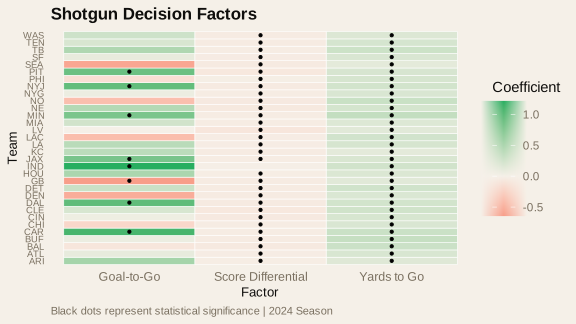
What drives these teams to use (or not use) shotgun at the goal line? To answer that question, I ran 32 logistic regressions to predict shotgun usage — one for each team.
The regressions reveal league-wide patterns in when teams choose shotgun: every NFL team runs more under center action when winning or facing short yardage. However, team philosophies diverge at the goal line.
Most teams treat goal-to-go situations identically to any other one-yard scenario. Seven teams treat the goal line as unique — the Steelers, Jets, Vikings, Jaguars, Colts, Cowboys, and Panthers — using less shotgun near the goal line than their overall tendencies would predict.
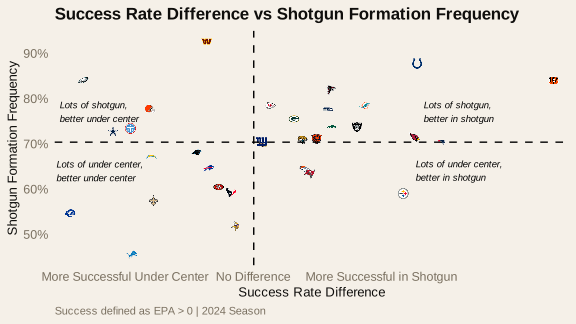
Interestingly, these seven teams are scattered across all four quadrants of our earlier effectiveness chart, suggesting no coherent philosophy. Treating the goal line differently doesn't guarantee smart decisions — the Jets and Cowboys would actually improve by using more shotgun at the goal line, not less.
With the exception of the Packers, every other team plays the goal line pretty much the same as similar yard-to-go situations elsewhere on the field. The Packers are the lone outlier in the opposite direction: they use significantly more shotgun at the goal line than in comparable short-yardage situations, though their overall goal line shotgun rate still ranks among the league's lowest.
To Shotgun or Not To Shotgun
So why do coaches continue calling shotgun at the goal line despite the data suggesting otherwise? The answer is frustratingly simple: most don't think about the goal line differently than any other short yardage situation. For 25 of 32 teams, a yard is a yard — whether it's at midfield or the one-yard line. The shotgun is so embedded in modern offensive philosophy that its use has become automatic, even in situations where the formation offers no advantage.
Pete Carroll's infamous call in Super Bowl XLIX was exactly as bad as it seemed. If you have a guy nicknamed Beast Mode, you line up under center and hand him the ball at the goal line. Ten years later, the data confirms what felt wrong in that moment: he left a 12% advantage on the table when he called a shotgun play. Today, six teams are still doing the same thing.
Data source: NFL play-by-play data, 2000–2024 seasons (scraped using NFLFastR)